IEC ABHFB0719P APEDA RCMC 33071/2026-2027

Home  /  Process

From Seed to Pack

The journey of Makhana — from the water bodies of Bihar to a graded, packed export lot.

From seed to pack

The journey of Makhana

Makhana, also known as fox nut or gorgon nut, is an aquatic crop known scientifically as Euryale ferox. Traditionally cultivated in the water bodies of Bihar and other parts of eastern India, it passes through a carefully managed journey before becoming the clean, white, naturally crunchy product recognised around the world.

From cultivation to harvesting, drying, roasting, popping, grading and packaging, every stage shapes the final quality.

Makhana seed cultivation in a prepared water body
01

Seed Selection & Cultivation

Starting with the seed

The Makhana journey begins with the selection and sowing of suitable seeds.

Makhana is an aquatic crop that grows naturally in ponds, shallow water bodies, wetlands and suitable waterlogged fields. In Bihar, particularly North Bihar, cultivation is an important part of the agricultural and rural economy.

Good cultivation practices and healthy seed material matter, because the quality of the harvested seed ultimately influences the popping quality and grade of the finished Makhana.
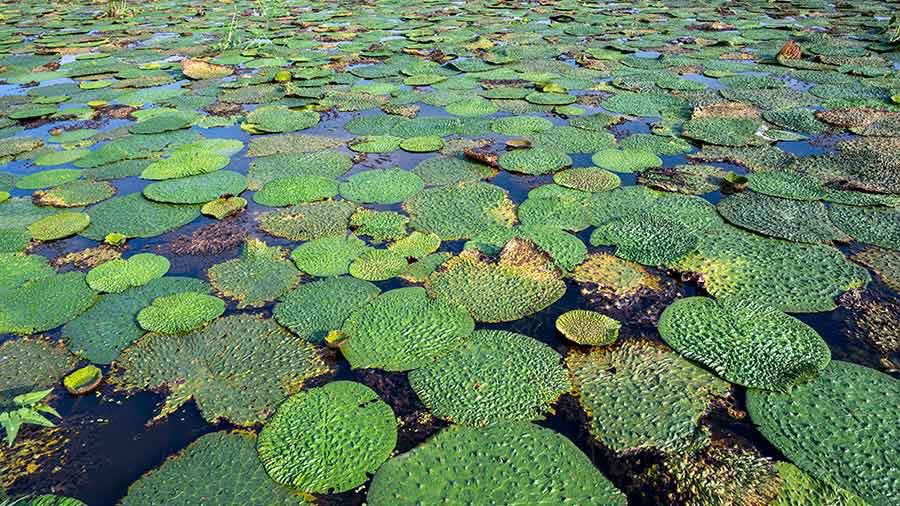
Makhana crop with broad floating leaves covering the water
02

Crop Growth & Farm Management

Growing in water

As the crop develops, the Makhana plant produces broad floating leaves across the water surface.

Farmers monitor the crop and water conditions throughout the growing period. Traditional cultivation remains highly labour-intensive, particularly where Makhana is harvested manually.

Cultivation has traditionally been concentrated in North Bihar, especially across the Mithila, Kosi and Seemanchal regions.

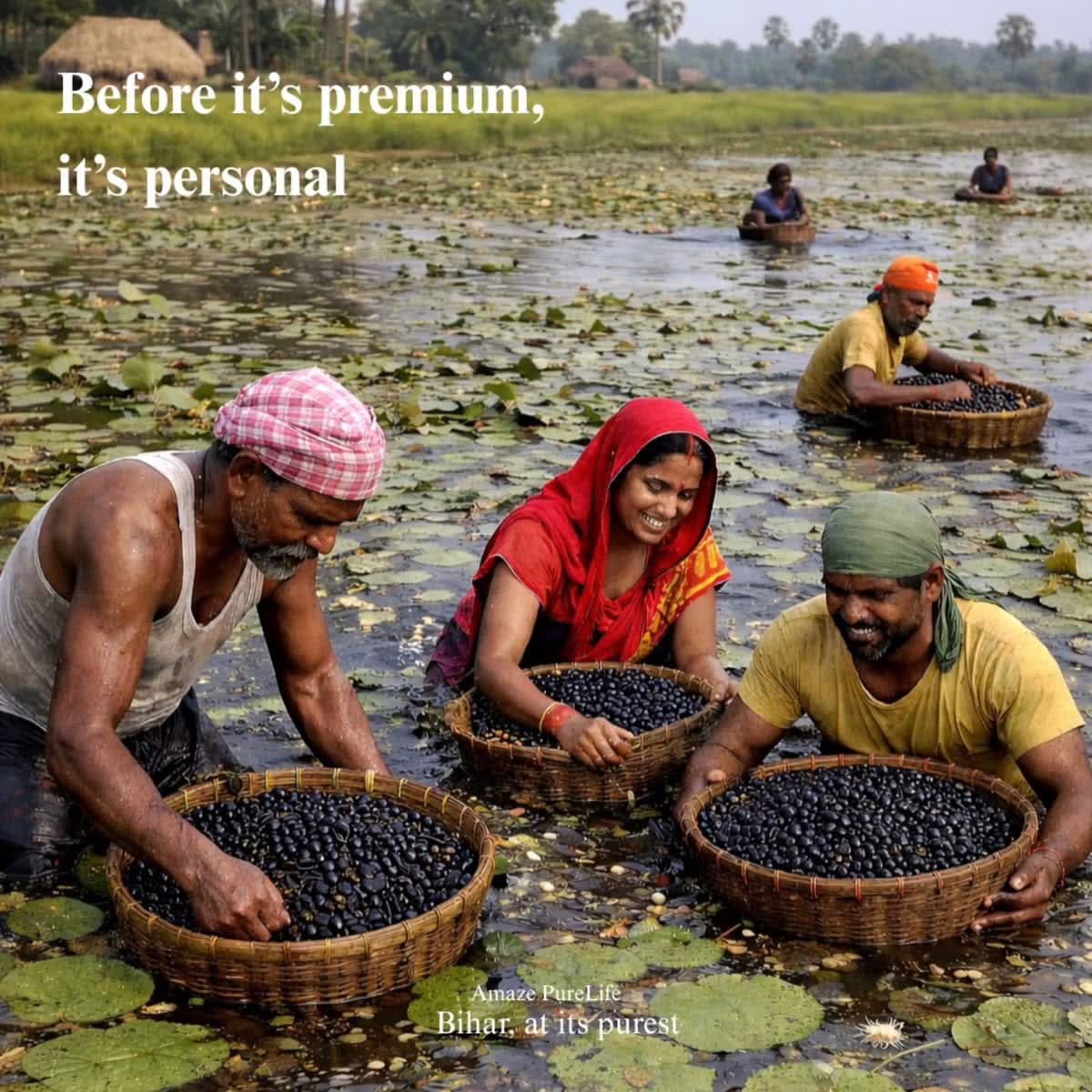
Harvested Makhana seeds collected from the water
03

Harvesting

Collecting the seeds from the water

Once the Makhana fruits mature, the seeds are ready for harvesting.

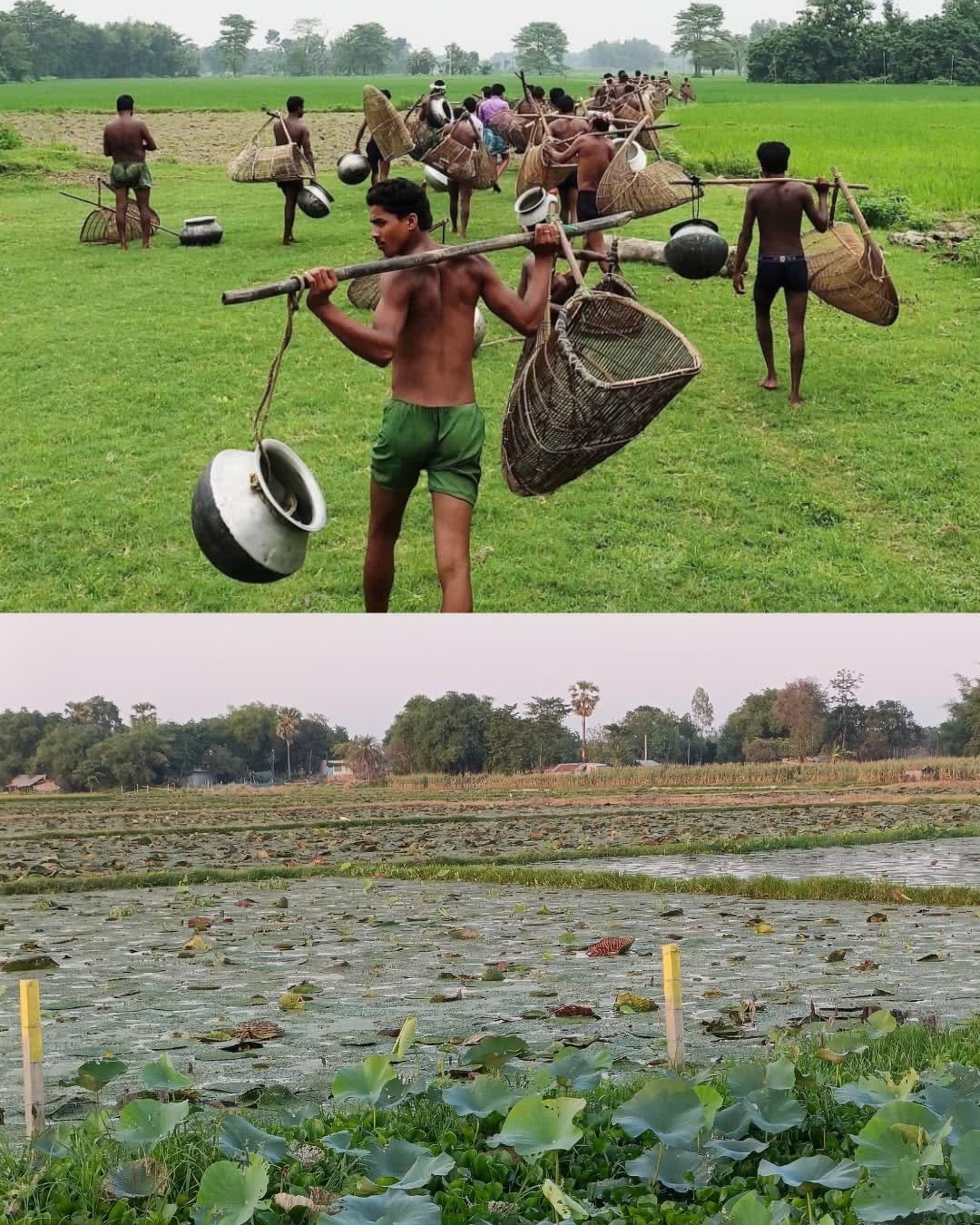
Harvesting is one of the most labour-intensive stages of the entire process. Workers enter the water and collect mature fruits and seeds, including seeds that have settled towards the bottom of the water body.

The traditional process requires experience and considerable manual effort, which makes the skill of the farmers and harvesters an important part of the Makhana value chain.

Raw Makhana seeds being washed
04

Cleaning & Washing

Preparing the raw seeds

Freshly harvested Makhana seeds contain mud, plant material and other natural impurities.

The harvested seeds are cleaned and washed thoroughly to remove unwanted material and prepare them for drying and processing.

Proper cleaning is an important first step in maintaining the hygiene and quality of the raw material.

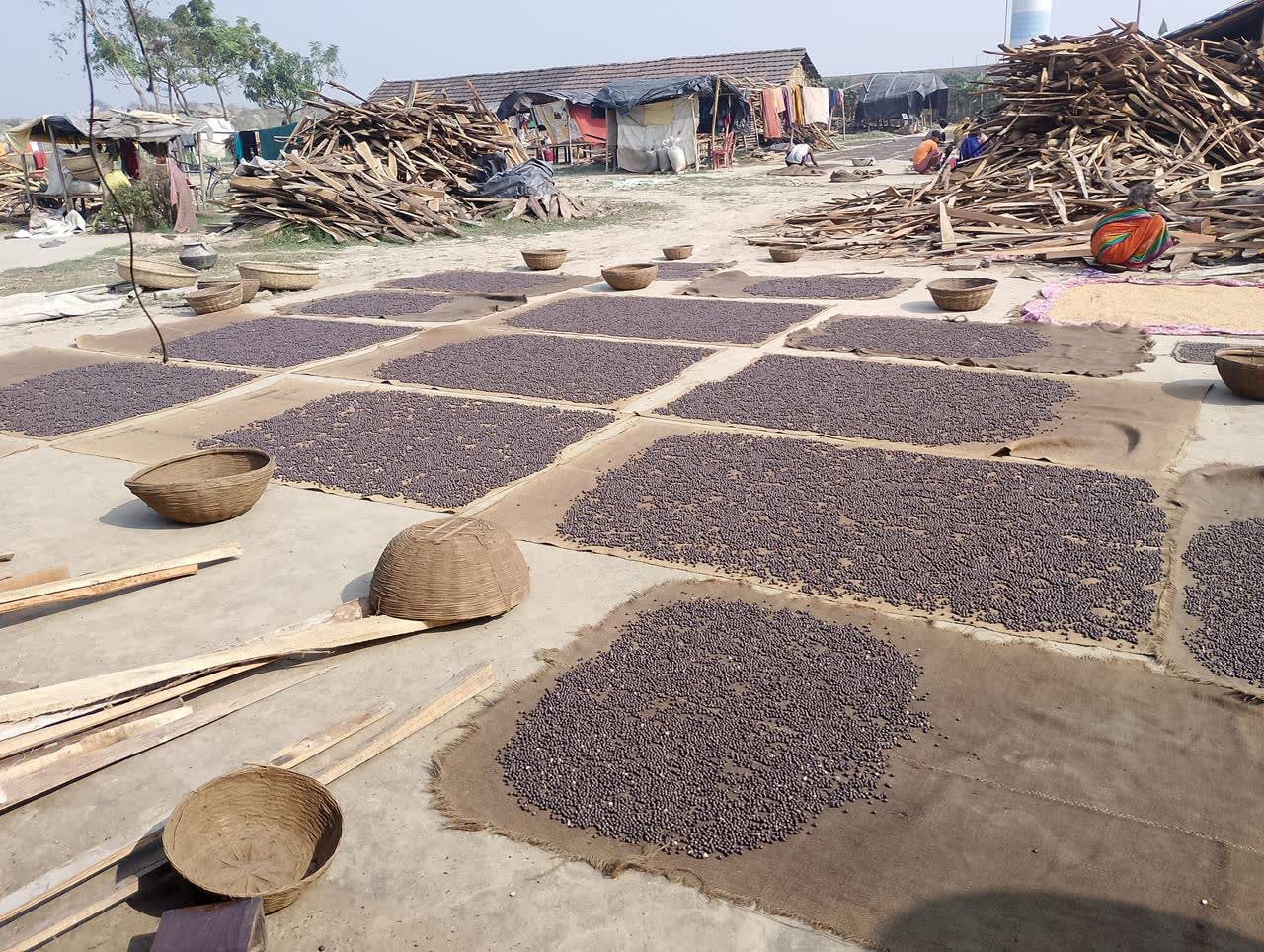
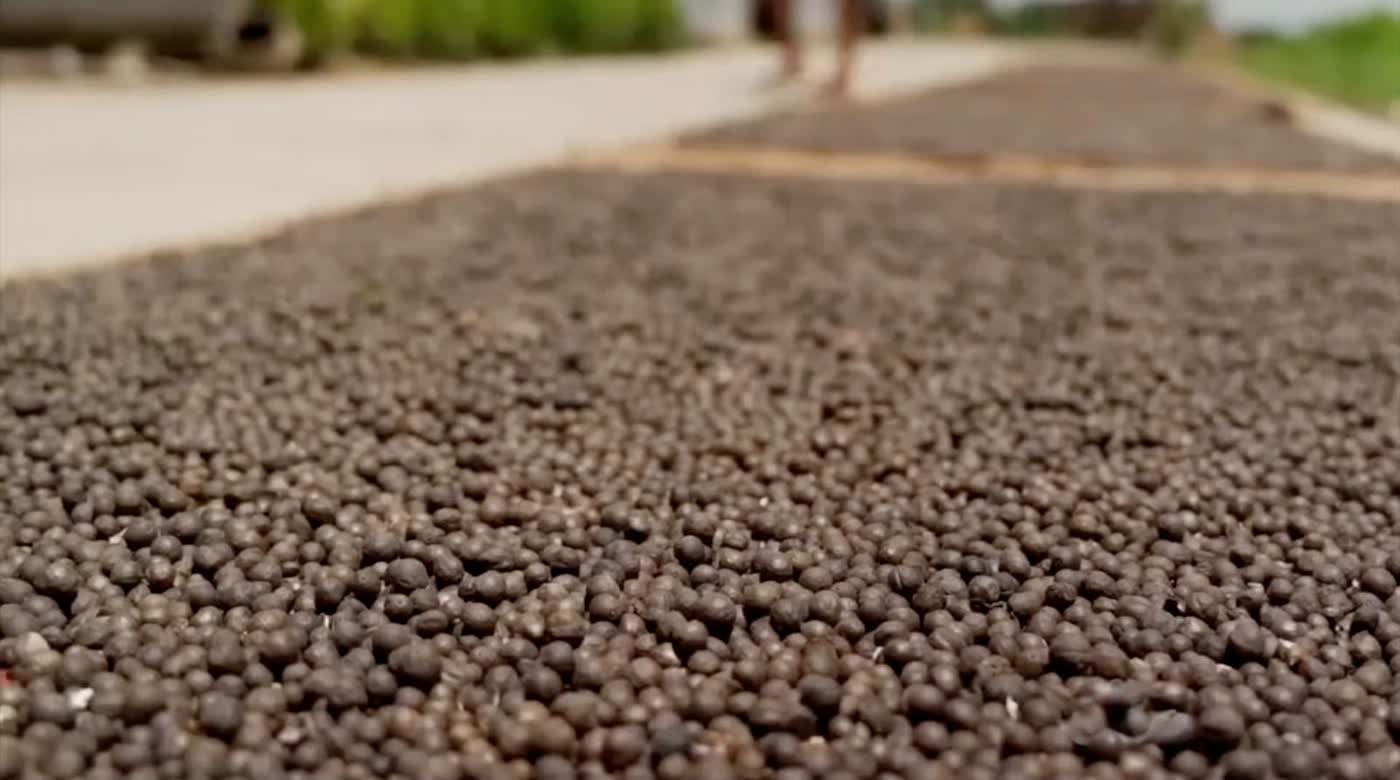
Makhana seeds spread out for sun drying
05

Drying

Reducing moisture naturally

After cleaning, the seeds are dried, traditionally using sunlight.

Drying reduces moisture and prepares the seeds for storage and subsequent processing.

This stage matters because moisture affects both the storage stability of the seeds and their behaviour during roasting and popping.

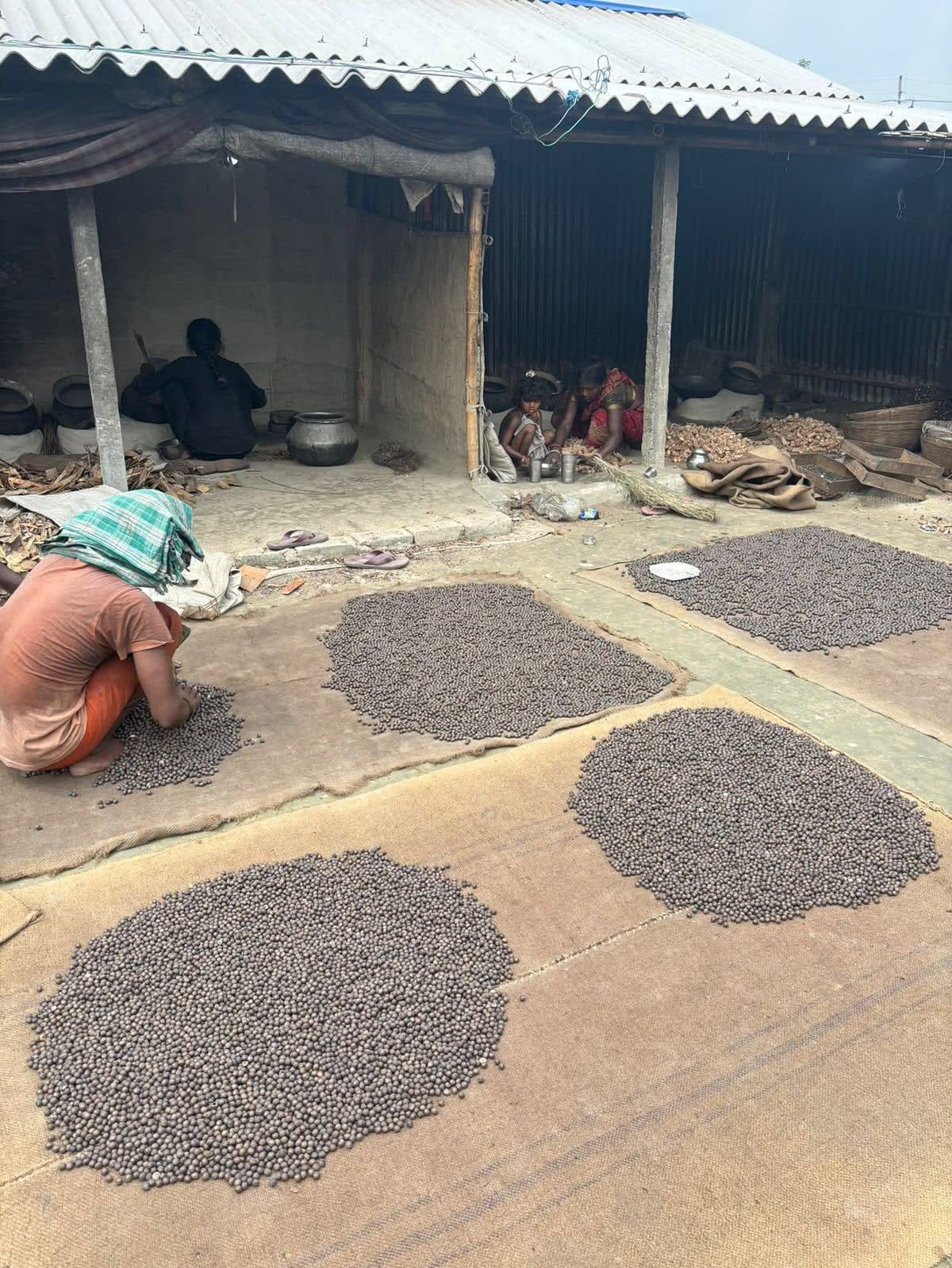
Dried Makhana seeds in storage and conditioning
06

Storage & Conditioning

Preparing the seeds for processing

After drying, the seeds may be stored and conditioned before roasting.

The objective is to hold the seed in the right condition so that it can withstand the roasting and popping stages that follow.

Traditional processing involves carefully controlled stages of drying, roasting and tempering. Exact parameters vary with the raw material, method and equipment in use.

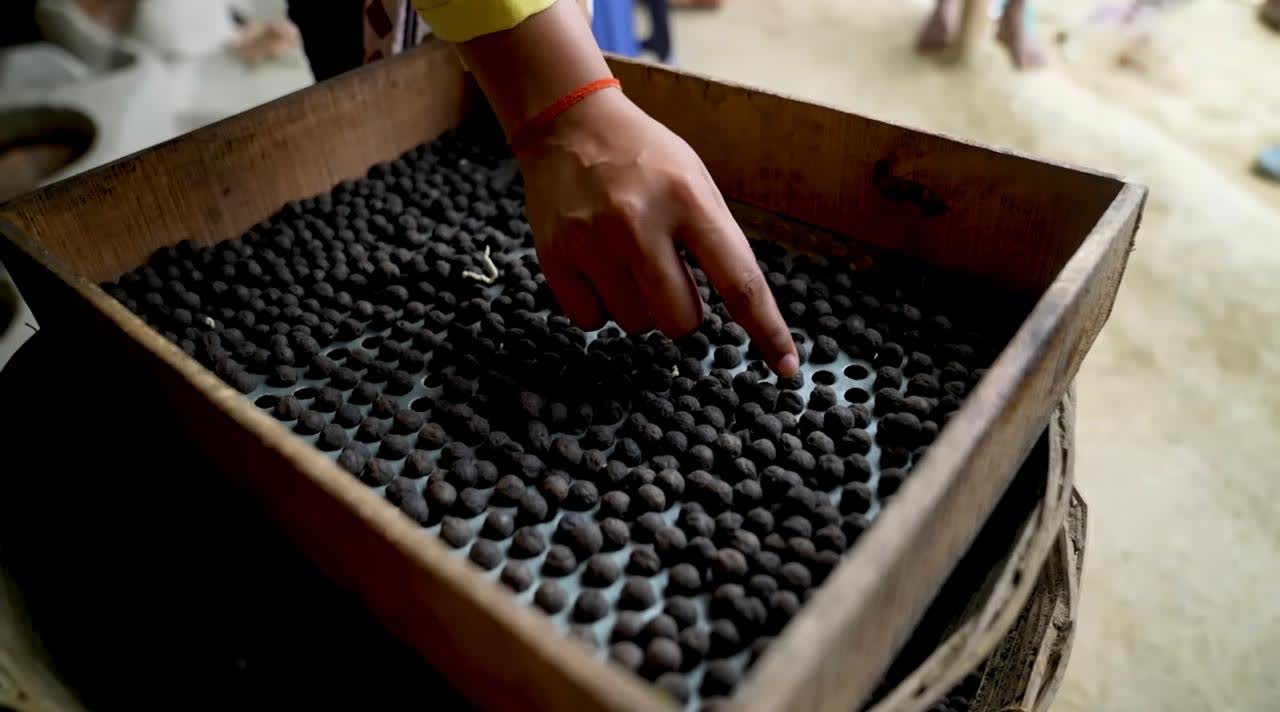
Raw Makhana seeds being size-graded through sieves
07

Size Grading of Raw Seeds

Selecting seeds for uniform processing

Before roasting, raw Makhana seeds are separated according to size.

Uniform seed sizing helps achieve more consistent roasting and popping, because seeds of similar size respond more uniformly to heat.

Traditional and modern systems both use sieves or grading equipment to separate seeds into size categories.

Makhana seeds being roasted in a traditional pan
08

Roasting

The heat treatment

The graded seeds are roasted.

Traditional processing uses high-temperature roasting in earthen pots or iron pans. The seed is heated to create the conditions needed for the hard outer shell to break and the inner kernel to expand.

This takes considerable skill. Temperature, roasting time and the timing of the operations that follow all influence final popping quality, and experienced processors develop a fine judgement for the exact stage at which a seed is ready to pop.

Roasted Makhana seeds resting and tempering
09

Tempering / Resting

Allowing the seeds to condition

Following roasting, the seeds are allowed to rest or temper.

This lets heat and moisture conditions inside the seed stabilise before the popping operation.

Traditional methods may involve a resting period of several days; modern systems may use controlled conditions. The objective is the same — to prepare the seed for efficient, uniform popping.

Roasted Makhana seeds being popped by hand with a wooden mallet
10

Popping

Where Makhana takes its characteristic shape

Popping is the most distinctive stage of Makhana processing.

The roasted seeds are struck with a wooden mallet at the right moment. The hard seed coat breaks, and the inner kernel expands and emerges as the characteristic white pop, known traditionally as lawa.

A small difference in timing, roasting condition or impact decides whether a seed produces a well-expanded pop, a partial one, or unusable material. Popping is as much a craft as a processing step.

Popped Makhana being sorted and graded
11

Sorting & Grading

Selecting the pops, then classifying them

Once popped, the Makhana is cleaned of loose particles and shell fragments, then sorted and inspected for size, shape, colour, whiteness, degree of expansion and cleanliness — and against broken, burnt, discoloured or partially popped material. Only suitable material carries forward.

What passes is then graded by size and appearance, using suta as the traditional size reference. Larger, well-expanded, clean and bright Makhana generally commands a higher value than smaller or irregular pieces. Commercial considerations include size uniformity, appearance, expansion, texture, defects and cleanliness.

For premium and export-oriented supply this stage carries real weight, because buyers require consistency across the whole lot. Grade names are not standardised across markets, so for export orders we grade against an agreed written specification rather than relying on a traditional grade name alone.

Finished Makhana being checked against specification
12

Quality Control

Checking every lot

Before packaging, the finished product is checked against the required specification.

Depending on market and buyer, parameters may include appearance, size and grade, moisture, foreign matter, physical defects, cleanliness, packaging condition and food-safety requirements.

For international shipments, additional testing and documentation may be carried out according to the destination country’s regulations and the buyer’s specification.

Graded Makhana being packed into food-grade packaging
13

Packaging

Protecting the product

After final grading and inspection, Makhana is packed in suitable food-grade packaging, selected for the intended market, quantity and transport requirements.

For bulk and export trade, inner liners, food-grade bags and protective outer packaging help guard against moisture, contamination and physical damage in transit and storage.

Specifications can be customised: bulk commercial bags, food-grade inner liners, export cartons or sacks, retail-ready pouches, private label, and custom weights and labelling.

Packed Makhana held in clean, dry storage before dispatch
14

Storage

Maintaining quality after packaging

Proper storage preserves Makhana quality after processing.

Finished product is held in a clean, dry and hygienic environment, protected from excess moisture, direct sunlight, pests and contamination.

Good storage practice maintains the characteristic crispness, appearance and overall quality of the product until dispatch.

A note on method. Traditional and mechanised processing differ. Roasting temperatures, resting periods, machinery and handling vary between processors and between lots. The stages above describe the Makhana value chain as generally practised and as documented by ICAR and allied Indian agricultural bodies — not a claim that every producer follows identical parameters.

From farm to global market

A traditional product, held to modern standards

Makhana combines traditional agricultural knowledge with skilled post-harvest processing. At BLUE HORSE INTERNATIONAL, quality begins at the source — responsible sourcing, careful selection and consistent grading against the requirement you give us.

From seed. To pop. To grade.
To global markets.