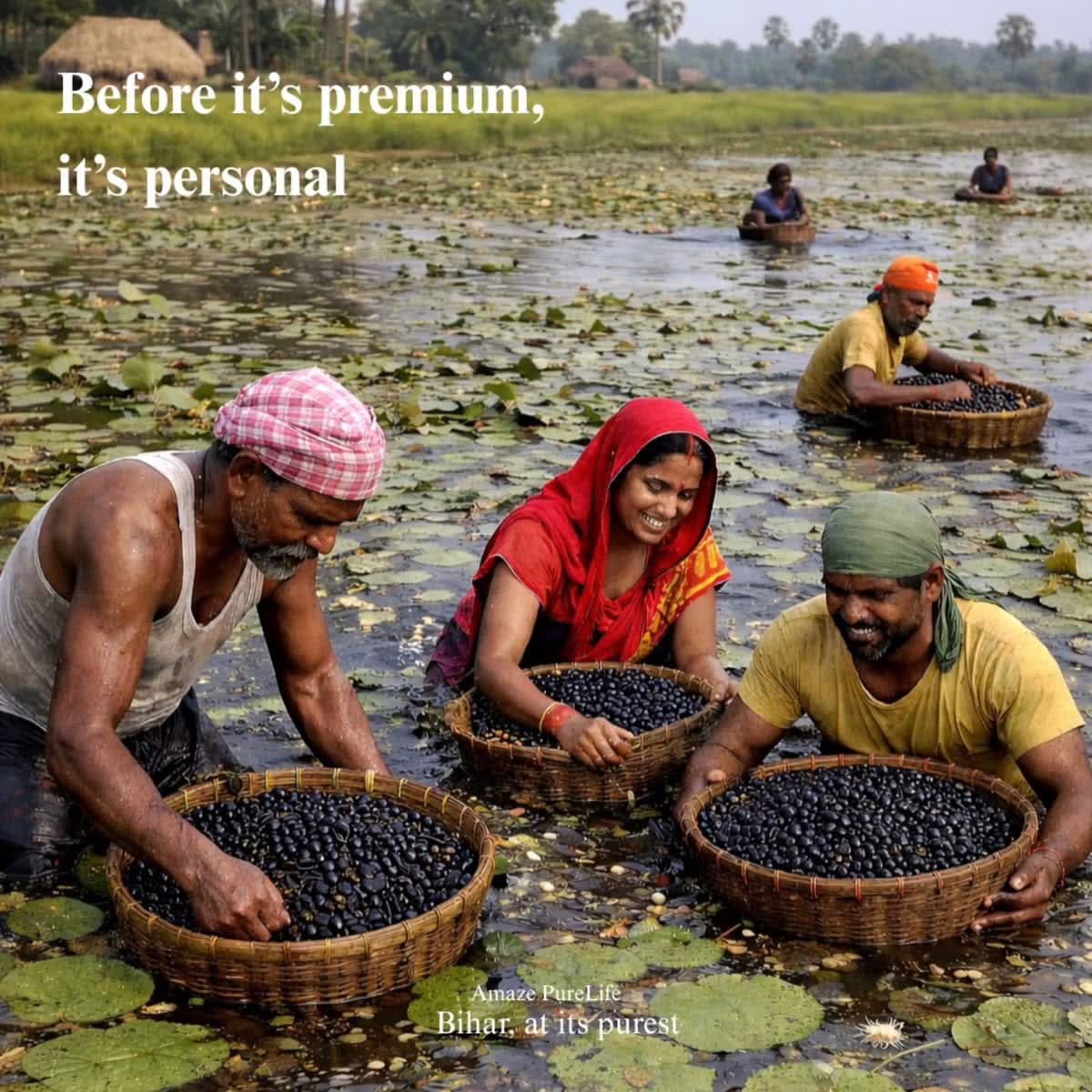
Makhana — fox nut, gorgon nut, or Euryale ferox — is an aquatic crop grown in the ponds and wetlands of eastern India. Most of the world’s supply comes from North Bihar, across the Mithila, Kosi and Seemanchal regions, where cultivation and hand-harvesting are a significant part of the rural economy.
Why buyers are asking for it
Makhana has moved from a regional Indian ingredient to an internationally traded snack base. It is light, naturally crisp, neutral in flavour and takes seasoning well, which makes it useful both as a finished retail snack and as an input for flavouring and roasting lines. Demand has grown fastest in markets looking for a puffed snack that is not fried and not cereal-based.
Raw versus processed
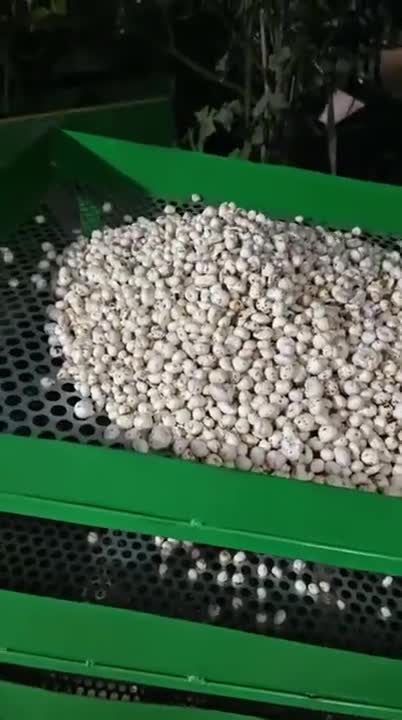
What trades internationally in bulk is the popped kernel — not the raw seed. The seed is harvested, cleaned, dried, roasted, rested, roasted again, and then struck so the shell breaks and the white kernel expands. That popped kernel is what gets sorted, graded and packed. If a supplier quotes you “makhana” without specifying grade and whether it is handpicked, the quotation is incomplete.
What to specify on a first enquiry
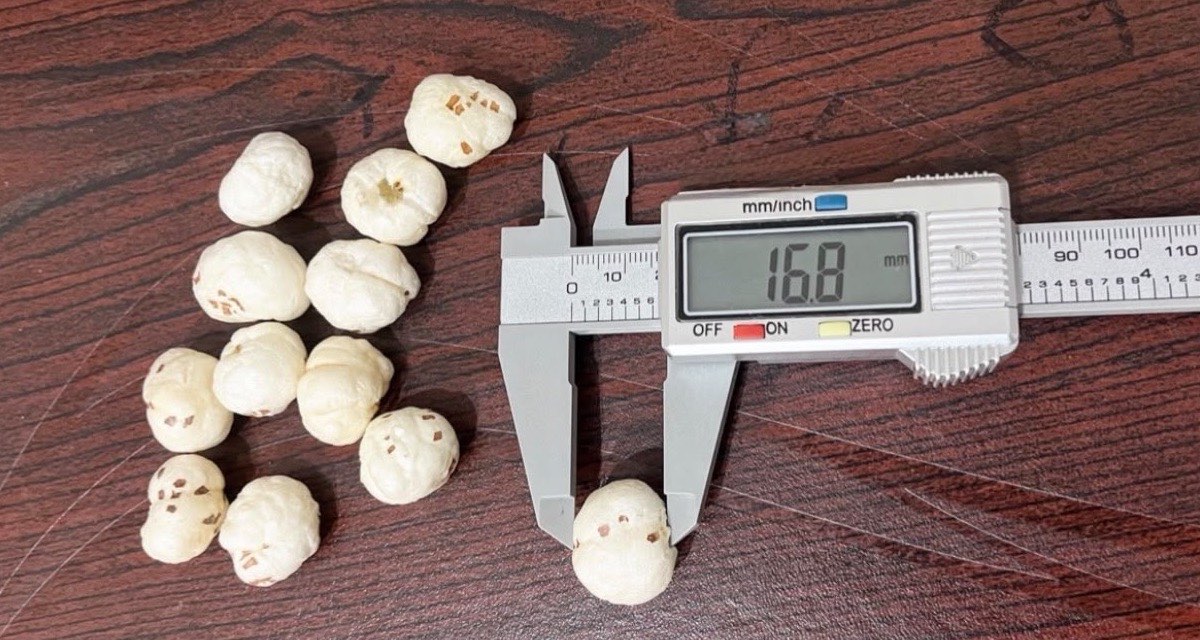
- Grade — by suta, or by a millimetre range you define
- Handpicked or non-handpicked — this is the single biggest price driver
- Quantity and whether the requirement repeats
- Packaging — bulk bags, cartons, retail pouches, private label
- Destination port and preferred Incoterm
- Quality parameters — moisture, foreign matter, colour, broken tolerance
A realistic expectation on consistency
Makhana is an agricultural product processed substantially by hand. Lots vary. A good supplier will agree a specification with you in writing before confirming the order and then grade against it — rather than shipping to a traditional grade name and leaving the interpretation open. Ask for a sample against the exact grade you intend to buy, and keep it as your reference.